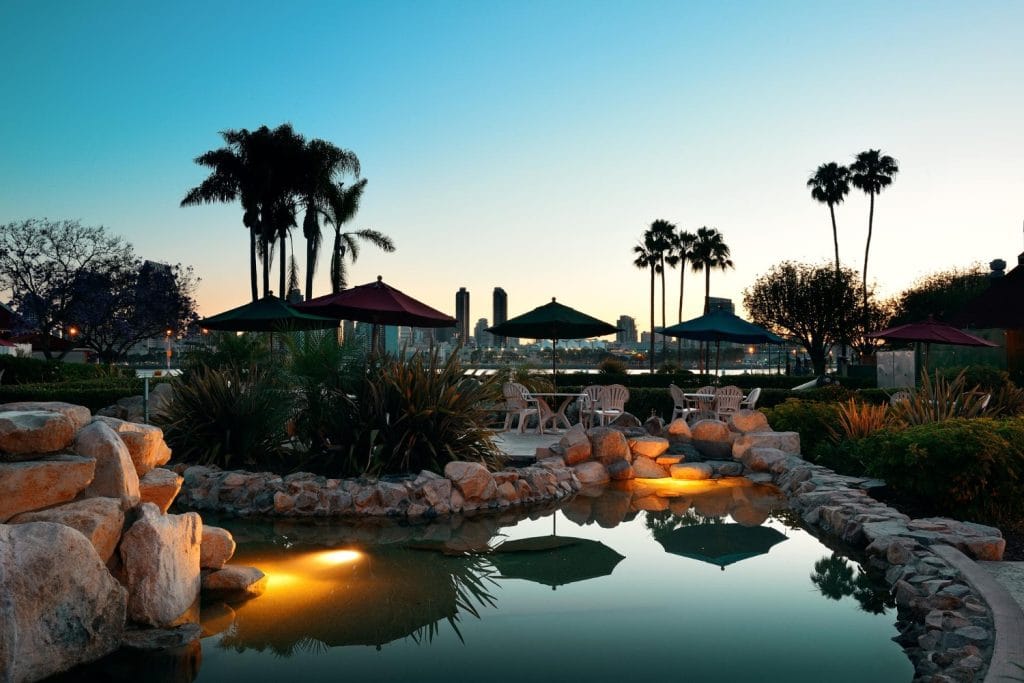
Redefining Branded Living on the Red Sea – A New Chapter in Lifestyle-Led Property Ownership Set above the shimmering coastline of Naama Bay, Cliffs, Curio Collection by Hilton introduces a sophisticated approach to residential living in one of the Red Sea’s most established destinations. Operating under the internationally recognised Curio Collection by Hilton, the development brings together private ownership, five-star hospitality, and long-term credibility within a single, carefully curated environment.
Rather than positioning itself as a conventional holiday complex, Cliffs has been conceived as a residential hospitality concept. It is designed for buyers who seek more than occasional use — individuals and families looking for consistency, service, and a property that performs both emotionally and practically over time.
Naama Bay and the Enduring Appeal of Sharm El Sheikh For decades, Sharm El Sheikh has stood as one of the Middle East’s most recognisable resort destinations. Naama Bay, in particular, has long been regarded as its social and lifestyle centre — a sweeping bay defined by calm waters, golden beaches, and a lively promenade that transitions effortlessly from day to night.
The appeal of the area lies in its balance. Days are shaped by the sea: swimming, snorkelling, diving, or simply enjoying the warmth and clarity of the Red Sea. Evenings bring a more vibrant energy, with restaurants, cafés, boutiques, and entertainment venues creating a cosmopolitan atmosphere without losing the relaxed rhythm that defines coastal living.
Crucially, Sharm El Sheikh has matured into a destination with reliable infrastructure, international air connectivity, and a reputation for safety and hospitality. These factors have helped sustain demand from European and Gulf markets, reinforcing its position as both a lifestyle location and a resilient property market.
An Elevated Setting with Lasting Value Cliffs occupies a naturally elevated position above Naama Bay, a feature that immediately distinguishes it from many existing developments. From this vantage point, residences benefit from sweeping views across the Red Sea, the lights of the bay below, and the surrounding desert landscape. In a mature resort market, such outlooks are increasingly rare, adding both emotional appeal and long-term value.
Despite this sense of elevation and privacy, the development remains closely connected to the heart of Naama Bay. Beaches, restaurants, and the main promenade are within easy reach, while Sharm El Sheikh International Airport is approximately ten minutes away, allowing owners and guests to arrive and depart with ease throughout the year.
Interiors Designed for Comfort, Light, and Longevity The apartments at Cliffs are designed with a clear focus on usability and comfort rather than short-term trends. Studios and larger residences feature open-plan layouts that maximise space and natural light, supported by generous glazing and well-proportioned living areas.
All homes are delivered fully finished and fully furnished to international hospitality standards. This turnkey approach allows owners to enjoy immediate use of their property or to integrate seamlessly into the professionally managed rental programme. Materials, bathrooms, storage solutions, and terraces have been selected to balance visual refinement with durability — an important consideration for homes intended for regular use rather than occasional occupation.
Living Within a Branded Hospitality Environment One of the defining characteristics of Cliffs is its integration within a branded hospitality framework. Managed under the Curio Collection by Hilton, the development benefits from professional oversight, consistent service standards, and access to amenities typically associated with high-end hotels rather than private apartment schemes.
Residents have access to swimming pools with sea views, landscaped communal areas, dining venues, cafés, and wellness facilities. Concierge services and professional property management support both daily living and long-term maintenance, ensuring the development retains its quality and appeal over time.
This structure is particularly attractive to international owners, offering reassurance that their property is being maintained and operated in line with global expectations.
A Considered Perspective on Investment From an investment standpoint, Cliffs reflects a growing preference for branded residences in established resort destinations. Properties associated with internationally recognised hospitality brands often demonstrate stronger occupancy levels, improved rental performance, and enhanced resale appeal when compared to non-branded alternatives.
Sharm El Sheikh’s continued popularity with European travellers, combined with its year-round climate, supports consistent demand. The ownership model at Cliffs allows for personal use alongside participation in a professionally managed rental programme, creating flexibility for owners whose priorities may evolve over time. While income is naturally influenced by market conditions and seasonality, the underlying fundamentals point towards long-term resilience rather than speculative growth.
The Developer’s Vision and Track Record Cliffs is delivered by Sharm Dreams Group, a developer with deep experience in Sharm El Sheikh and a focus on hospitality-led residential projects. Their approach centres on partnering with established international brands, selecting prime locations, and creating developments that are operationally sustainable rather than purely sales-driven.
This long-term mindset is evident in the collaboration with Hilton’s Curio Collection, ensuring that design, management, and resident experience are aligned with global standards from the outset.
A Lifestyle Defined by Variety and Ease Ownership at Cliffs places residents within reach of a broad range of experiences. Beyond the beaches and watersports of Naama Bay, the wider region offers desert excursions, cultural encounters, wellness retreats, and day trips that add depth and variety to life on the Red Sea. Everyday conveniences, dining, and entertainment are close at hand, allowing owners to enjoy a lifestyle that feels both relaxed and engaging throughout the year.
A Measured Conclusion Cliffs, Naama Bay represents a thoughtful evolution of residential living in Sharm El Sheikh. By combining elevated sea views, fully serviced residences, and the reassurance of an international hospitality brand, it appeals to buyers seeking stability, ease of ownership, and enduring lifestyle value.
Rather than positioning itself as a fleeting opportunity, Cliffs reflects a longer-term vision — one rooted in quality, location, and the continued appeal of one of the Red Sea’s most established destinations.
Why villas hold a powerful appeal in Egypt’s property market, and what buyers must understand before committing to land, walls and long-term responsibility
Villas for sale in Egypt occupy a particular place in the imagination of international buyers. They suggest space in a crowded world, privacy in a region defined by density, and a slower rhythm of life framed by sun, sea or desert horizons. For many, the idea of owning a villa in Egypt is not merely a property decision, but a lifestyle aspiration shaped by climate, geography and the promise of autonomy.
Yet villas are also where Egypt’s property market becomes most complex. Unlike apartments, which benefit from scale, shared responsibility and deep local familiarity, villas sit closer to the land, both legally and practically. They carry freedoms, but also obligations. They magnify opportunity and risk in equal measure.
To understand villas in Egypt is to understand how land, law and long-term stewardship intersect in a country whose property traditions differ markedly from those of Europe or the UK.
Why villas occupy a different emotional register
The appeal of villas is universal, but in Egypt it carries additional weight. Space has always been precious here. Fertile land is scarce, cities are dense, and the desert imposes hard boundaries. A villa therefore signals not only comfort, but achievement. It represents control over environment, privacy from neighbours and the ability to shape one’s immediate surroundings.
For domestic buyers, villas often mark a transition into a different phase of life. For international buyers, they offer something rarer: the possibility of space without isolation, warmth without seasonal dependence, and ownership in a country that still feels underexplored compared with other sun-belt markets.
This appeal is genuine. But it must be understood properly.
Where villas are found, and why location matters more than price
Villas in Egypt are not evenly distributed. They cluster where planning, infrastructure and land allocation permit lower density. These clusters define very different ownership experiences.
In Greater Cairo, villa compounds have emerged as responses to congestion and pollution. Gated communities offer greenery, security and predictability, often at a premium. Here, villas are tightly managed, subject to community rules and long-term service charges. The trade-off for privacy is governance.
Along the Mediterranean coast, villas often reflect older patterns of ownership. Plots may be larger, buildings more individual, and documentation more variable. The charm is real, but so are the risks if due diligence is superficial.
On the Red Sea, villas tend to be part of master-planned developments. These properties are designed for lifestyle use, often with sea views and shared facilities. The experience can feel familiar to overseas buyers, but dependence on developer-led management structures introduces long-term considerations that should not be underestimated.
In emerging inland developments and new cities, villas are sold on vision. Space is abundant, layouts are modern, and pricing can appear attractive. The risk lies in timing. Infrastructure, services and community life may lag far behind construction.
In all cases, location defines not just value, but complexity.
Land, not walls, is where villas become complicated
The defining difference between villas and apartments in Egypt is land. Apartments sit within buildings. Villas sit on plots, and plots introduce legal and regulatory layers that are often unfamiliar to foreign buyers.
Land ownership in Egypt is subject to specific rules, historical allocations and administrative oversight. Not all land is equal. Some plots carry clear ownership rights. Others are governed by usage rights, development permissions or long-term allocations rather than outright freehold in the sense many buyers expect.
Villas built within planned developments may sit on land controlled by a master developer, with ownership rights structured accordingly. Villas outside these frameworks may involve more direct land ownership, but also greater exposure to historical claims, registration complexity and boundary issues.
The pitfall is assuming that a villa’s physical presence guarantees legal clarity. In Egypt, land status must always be examined independently of the building that sits upon it.
A critical caution on legal representation
There is no responsible way to purchase a villa in Egypt without engaging a reputable, fully independent lawyer acting exclusively on behalf of the buyer. This point bears repetition because villas amplify legal risk more than any other residential asset.
Developer-recommended advisers, informal assurances and locally standard contracts are not sufficient protection for foreign purchasers. Documentation may be lawful while still failing to secure enforceable ownership, registration, resale rights or inheritance. In villa transactions, where land, boundaries and permissions are involved, assumptions are particularly dangerous.
An independent lawyer should verify land status at source, confirm the nature of ownership rights, examine registration pathways, review planning permissions, assess contractual remedies and scrutinise exit constraints before any funds are committed. Buyers who treat legal advice as optional often discover, years later, that what they own cannot be defended, transferred or sold as expected.
This is not a theoretical risk. It is one of the most common causes of long-term loss in the villa market.
Gated communities and the comfort of structure
Many foreign buyers gravitate towards gated villa compounds, particularly around Cairo and along the Red Sea. These environments offer familiarity. Rules are defined, services are centralised and security is visible.
There are advantages here. Infrastructure tends to be reliable. Maintenance is coordinated. Neighbourhood standards are enforced. For buyers who value predictability, this structure can be reassuring.
However, structure comes with cost and constraint. Service charges can rise over time. Community rules may limit alterations, rentals or resale strategies. Management quality may vary as developments age or change hands.
A villa within a compound is not an island. It is part of a system, and that system deserves as much scrutiny as the property itself.
Independent villas and the burden of autonomy
Villas outside managed developments offer greater freedom. Buyers can alter, extend and personalise. There is no committee, no shared governance and fewer recurring charges.
But autonomy brings responsibility. Maintenance, utilities, security and compliance fall entirely on the owner. Disputes over boundaries, access or services must be handled individually. In some areas, informal arrangements substitute for formal infrastructure.
For buyers accustomed to strong municipal support, this can be a shock. Independence is attractive, but it requires local knowledge and ongoing engagement.
Costs that emerge over time
The purchase price of a villa is only the beginning. Ongoing costs vary widely depending on location, management structure and build quality. Maintenance of gardens, pools, roofs and boundary walls is continuous rather than occasional.
Utilities may require individual arrangements. Staffing, where employed, brings legal and social responsibilities. In some areas, insurance is limited or unavailable, placing greater emphasis on preventative upkeep.
Villas reward owners who plan for longevity rather than immediacy.
Rental expectations and reality
Some buyers view villas as income-producing assets. While short-term and seasonal demand exists, it is uneven. Villas require higher occupancy to justify running costs, and management quality directly affects returns.
Without professional oversight, rental performance can disappoint. Villas are less forgiving than apartments when demand softens.
Exit strategy, the unspoken challenge
Villas are inherently less liquid than apartments. Buyer pools are smaller. Legal clarity becomes critical. Pricing expectations must align with local realities rather than international benchmarks.
Exit is easiest where documentation is clear, communities are established and demand is proven. Buyers who ignore exit considerations at entry often regret it later.
Villas as long-term commitments
Buying a villa in Egypt is not a casual decision. It is a commitment to place, process and patience. Those who succeed approach the market with respect for its differences, a willingness to engage professionally and an acceptance that clarity costs money upfront but saves far more later.
Egypt’s villa market offers genuine opportunity, but only to buyers who treat it seriously.
Financial Disclaimer The information provided in this article is for general informational purposes only and does not constitute financial advice. While every effort has been made to ensure the accuracy of the content, market conditions may change, and unforeseen risks may arise. The author and publisher of this article do not accept liability for any losses or damages arising directly or indirectly from the use of the information contained herein.
Why apartments have become the focal point of Egypt’s property market, and what buyers must understand before committing
Apartments for sale in Egypt attract attention for reasons that extend well beyond price. For international buyers, they represent accessibility in a market that remains comparatively affordable, climate-reliable and geographically well positioned. For domestic buyers, apartments are the backbone of urban life, the most practical response to population growth and changing lifestyles.
Yet Egypt is not a market that rewards casual assumptions. Apartments here sit at the intersection of history, regulation, culture and rapid modernisation. To understand why they appeal, and where the risks lie, requires stepping beyond listings and brochures and into the lived reality of how property functions in Egypt.
This is not a market driven by speculation alone. It is shaped by necessity, geography and long-term demographic pressure. Apartments are not simply products; they are solutions. But solutions only work when properly understood.
Egypt’s preference for apartment living is not a trend. It is structural. Dense urban centres, limited fertile land and a population concentrated along the Nile have produced cities that build upward rather than outward. Apartments emerged as the most efficient way to house millions while preserving agricultural land and managing infrastructure.
In Cairo, Alexandria and the Delta cities, apartment buildings form the fabric of daily life. Families grow within them, businesses operate from them, and entire neighbourhood identities develop floor by floor rather than street by street. This long familiarity with apartment living distinguishes Egypt from markets where apartments are a relatively recent adaptation.
For buyers, this matters. Apartments in Egypt are not niche investments. They are mainstream assets with deep local demand, which provides resilience even when external interest fluctuates.
The appeal for international buyers
International interest in Egyptian apartments has grown quietly rather than explosively. Buyers are often drawn by climate stability, relative affordability and the ability to secure space in regions where similar conditions elsewhere have become prohibitively expensive.
Apartments offer a manageable entry point. They require less capital than villas, involve fewer maintenance variables and are easier to rent, occupy or resell within local markets. In coastal areas and new urban developments, apartments often form the backbone of mixed-use communities designed for long-term living rather than short-term tourism alone.
This appeal is real, but it is not uniform. Egypt rewards selectivity. Location, legal structure and management quality matter far more than headline price.
Cairo apartments, intensity and opportunity
Cairo’s apartment market is vast, complex and uneven. The city contains some of the most expensive residential districts in the country alongside areas where prices remain accessible but infrastructure lags.
Neighbourhoods such as New Cairo, Maadi and parts of Zamalek attract buyers seeking established services, international schools and predictable management. Newer developments on the city’s periphery offer modern layouts and planned communities, but require patience as infrastructure and social life mature.
Apartments in Cairo tend to hold value through usage rather than yield. They are lived in, adapted and retained across generations. For foreign buyers, understanding whether an apartment sits within a functioning neighbourhood or an emerging one is critical to long-term satisfaction.
Alexandria and the Mediterranean pace
Alexandria offers a different apartment experience. The Mediterranean climate softens both architecture and lifestyle. Buildings are often older, layouts more generous, and daily rhythms slower.
Apartments near the seafront carry emotional value beyond their bricks and mortar. They appeal to buyers seeking seasonal living or a gentler pace than Cairo offers. However, older buildings may present challenges in maintenance, ownership documentation and communal management.
Here, apartments are as much about atmosphere as asset value. Buyers drawn to Alexandria tend to value experience over optimisation.
The Red Sea apartment market, a modern evolution
The Red Sea coast represents Egypt’s most internationally recognisable apartment market. Purpose-built developments, modern infrastructure and a strong service economy have created environments that feel familiar to overseas buyers.
Apartments here are often part of managed communities with pools, security and shared amenities. This structure offers comfort, but also introduces long-term considerations around service charges, governance and maintenance standards.
While the Red Sea market has matured, it remains sensitive to developer quality. Apartments in well-managed developments behave very differently from those where management weakens over time.
New cities and the promise of planning
Egypt’s new urban developments are reshaping how apartments are designed and marketed. Planned cities emphasise space, greenery and transport links, offering an alternative to historic density.
Apartments in these areas often attract buyers seeking modern layouts and predictable infrastructure. However, the promise of planning does not always align with immediate reality. Social life, retail and services can take years to develop.
The risk is not in the concept, but in timing. Buyers must decide whether they are purchasing into a finished environment or a long-term vision.
Ownership, contracts and the importance of clarity
Perhaps the most misunderstood aspect of buying apartments in Egypt is ownership itself. Contracts may be valid without being fully protective. Registration processes can be slow, layered or incomplete.
Apartments may be sold with rights that differ subtly from expectations formed in other jurisdictions. Issues around land ownership, registration pathways and future transferability must be understood clearly before any commitment is made.
This is where many foreign buyers encounter difficulty, not because of wrongdoing, but because assumptions were never tested.
A critical caution on legal representation
There is no responsible way to purchase an apartment in Egypt without engaging a reputable, fully independent lawyer acting solely on behalf of the buyer. This is not a procedural formality. It is a fundamental safeguard.
Developer-recommended advisers, informal assurances and template contracts expose buyers to avoidable risk. Documentation that appears complete may fail to protect ownership, resale rights or inheritance. Contracts may comply with local practice while still leaving critical vulnerabilities unresolved.
An independent lawyer should verify ownership at source, confirm registration mechanisms, review development permissions, scrutinise payment structures and assess exit constraints before any funds are transferred. Buyers who treat legal advice as optional frequently discover, often years later, that the true cost of neglect was not legal fees but irreversibility.
This caution cannot be overstated.
Costs beyond the purchase price
Apartments in Egypt carry ongoing costs that vary widely. Service charges, maintenance contributions and utilities differ by development and region. In managed communities, charges can increase as buildings age or facilities expand.
Buyers should assess not only affordability at purchase, but sustainability over time. Low entry prices can mask higher long-term obligations.
Rental expectations and reality
Many buyers consider rental income as part of their decision. While demand exists, returns are rarely uniform. Seasonal fluctuations, management quality and local demand patterns all influence outcomes.
Apartments that perform well in theory may underperform in practice if location, access or services fall short of tenant expectations.
Exit strategy, the overlooked question
Apartments are easier to buy than to sell. Liquidity varies significantly. Legal clarity, management quality and neighbourhood maturity all affect resale prospects.
Buyers who consider exit at the outset tend to make more resilient decisions. Those who ignore it often encounter friction later.
Apartments as long-term decisions
Buying an apartment in Egypt is not a speculative trade. It is a long-term decision shaped by environment, law and lived experience. Those who succeed tend to value patience, clarity and professional guidance over speed.
Egypt’s apartment market offers genuine opportunity, but only to those who respect its rules.
Financial Disclaimer The information provided in this article is for general informational purposes only and does not constitute financial advice. While every effort has been made to ensure the accuracy of the content, market conditions may change, and unforeseen risks may arise. The author and publisher of this article do not accept liability for any losses or damages arising directly or indirectly from the use of the information contained herein.
Between Stone, Sand and the Pull of the Nile, How land, history and habit shape Egypt’s residential landscape
Property in Egypt has never been a purely financial concept. Land here carries memory. Buildings inherit context. A home is rarely just shelter; it is position, proximity, history and, increasingly, aspiration. To talk about property for sale in Egypt is not to talk about a single market, but about many overlapping ones, shaped by geography, climate, culture and the long shadow of continuity that defines the country itself.
For centuries, ownership in Egypt was inseparable from the river. The Nile determined where people could live, what they could grow and how communities formed. Even now, long after modern construction techniques and infrastructure have extended habitation into desert margins, the logic of settlement remains recognisably Nile-centric. Property value still follows water, access and connection. Where the river flows, life clusters. Where it retreats, development becomes more deliberate, more engineered, and often more symbolic.
Cairo sits at the centre of this equation, not merely as a capital but as a gravitational force. The city absorbs people, money and ambition from across the country. Property here reflects Cairo’s contradictions. In some districts, grand early twentieth-century buildings speak of a cosmopolitan past, their facades elegant, their interiors worn by time and density. Elsewhere, concrete towers rise quickly, shaped more by necessity than design, housing generations under one roof. Newer developments push outward, towards planned communities and satellite cities, promising order, space and predictability in contrast to the capital’s relentless intensity.
Yet Cairo is not the whole story. Property for sale in Egypt unfolds very differently once one steps away from the capital’s orbit. Alexandria, for example, carries a distinct architectural and emotional inheritance. Properties there often face the Mediterranean, shaped by sea air, light and a history of outward-looking trade. Apartments feel less compressed, streets more linear, the relationship between building and horizon more generous. Ownership here is tied not only to function but to atmosphere, to a particular coastal sensibility that has endured despite demographic pressure.
Further south, along the Nile Valley, property becomes quieter, more grounded. Towns and cities here grow at a different pace. Homes tend to prioritise family continuity over individual expression. It is not uncommon to find buildings expanded vertically over time, floors added as families grow, ownership layered rather than transferred. In these areas, property is less transactional and more generational, an asset measured as much in stability as in monetary value.
The deserts, once seen primarily as barriers, have become canvases. Along the Red Sea coast, development has followed a different logic altogether. Here, property is shaped by climate, leisure and distance from traditional urban centres. Buildings orient themselves towards light, breeze and views rather than streets and neighbourhoods. Space is organised horizontally, not vertically. The idea of what a home represents shifts subtly; it becomes seasonal, lifestyle-driven, less anchored to work and more to retreat.
This diversification of property types reflects broader changes in how Egyptians, and those looking towards Egypt, think about living. Urban density has sharpened the appeal of planned environments. Coastal development has redefined the relationship between home and environment. New towns attempt to introduce structure where organic growth once dominated. Each approach carries its own assumptions about how life should be lived.
What is striking is how often modern developments borrow from ancient instincts. Orientation to sun and shade, courtyards, natural ventilation, proximity to communal space – these are not imported ideas, but inherited ones, reinterpreted through contemporary materials and expectations. Even when architecture appears new, its logic often echoes older forms.
Property for sale in Egypt also reflects the country’s social fabric. Extended families remain central, influencing layout and use. Multi-bedroom apartments, flexible living spaces and shared amenities respond to this reality. Privacy is valued, but so is connection. Homes are designed to host, to accommodate gatherings, to absorb daily life rather than retreat from it. This stands in contrast to more individualised housing models elsewhere.
The question of value, so often reduced to price per square metre, takes on different meaning here. Location matters, but so does access to services, transport, schools and daily convenience. In a country where informal solutions often fill gaps left by infrastructure, proximity can outweigh aesthetics. A modest apartment near transport and commerce may be more desirable than a larger one disconnected from daily rhythms.
There is also an emotional dimension to property in Egypt that resists purely analytical framing. Many buyers are motivated by return, stability or diversification, but just as many are influenced by memory, heritage or personal connection. Egyptians living abroad often look back towards property as a way of maintaining a tangible link. Others see ownership as a form of permanence in a world that feels increasingly fluid.
The legal and administrative frameworks surrounding property have evolved over time, reflecting the state’s attempts to balance regulation with growth. While processes can appear opaque to outsiders, they are shaped by local norms and historical precedent. Understanding property in Egypt requires an appreciation of how formal rules and informal practice interact. Transactions do not occur in a vacuum; they are embedded in social expectation.
Urban expansion has also altered perceptions of distance. Areas once considered remote are now linked by roads, transport projects and new infrastructure. This has reshaped how people think about commuting, neighbourhood and access. Property markets respond quickly to these shifts, often anticipating change before it fully materialises on the ground.
What unites these varied markets is a shared sense of adaptation. Egypt’s property landscape is not static. It responds to demographic pressure, economic adjustment and changing lifestyles. Yet it does so in a way that rarely breaks completely from the past. New builds rise beside older structures. Planned developments coexist with organic neighbourhoods. The result is a patchwork rather than a master plan, a reflection of a society accustomed to layering solutions rather than erasing them.
Critically, property in Egypt is not detached from daily life. It is not an abstract asset class discussed only in financial terms. It is where families live, argue, celebrate and endure. Buildings show wear quickly because they are used fully. Homes are lived in, adapted, extended and reshaped. This vitality can surprise those accustomed to more controlled environments, but it is central to understanding value here.
The future of property for sale in Egypt will likely continue along this dual path: outward expansion into new spaces and inward adaptation of existing ones. Pressure on land will not ease. Demand for housing will remain persistent. The forms this takes will reflect the same tensions that have always defined the country: between density and space, tradition and innovation, continuity and change.
For those looking at Egypt’s property landscape from a distance, it is tempting to generalise. To speak of opportunity or risk in broad terms. But Egypt resists such simplification. Each city, each neighbourhood, even each building carries its own logic. Understanding property here requires patience, observation and a willingness to see beyond surface narratives.
In the end, property for sale in Egypt tells a story larger than bricks and mortar. It speaks of how people organise themselves, how they adapt to constraint, and how a country with one of the world’s longest continuous histories continues to house itself in the present. The buildings may change shape, materials and ambition, but the underlying impulse remains familiar: to claim space, to belong, and to endure.
Financial Disclaimer: The information provided in this article is for general informational purposes only and does not constitute financial advice. While every effort has been made to ensure the accuracy of the content, market conditions may change, and unforeseen risks may arise. The author and publisher of this article do not accept liability for any losses or damages arising directly or indirectly from the use of the information contained herein.
Villas for Sale in Egypt: Why 2026 Is Shaping Up as a Landmark Year for Buyers
Egypt’s real-estate market enters 2026 with renewed confidence, greater international visibility and a shifting balance of supply and demand that places villas firmly at the centre of global investor attention. For years, the narrative around Egypt focused primarily on tourism, large-scale infrastructure projects and macroeconomic reform. Property, though ever-present, rarely commanded the kind of global conversation associated with markets in Southern Europe or the Gulf. That is no longer the case.
Several forces have converged to reshape Egypt’s position in the international housing landscape. A stabilising macroeconomic picture, as outlined in the World Bank Egypt economic overview, has been accompanied by continued structural adjustment, a robust tourism recovery and a wave of international capital seeking value-driven villa markets. For the first time in over a decade, villas for sale in Egypt are being recognised not just as an affordable alternative, but as a high-potential investment category in their own right.
For British, European and Gulf buyers who have seen villa prices escalate in Spain, Portugal and Greece, Egypt’s Red Sea and Mediterranean coasts present an unusually compelling combination: substantial living space, manageable ownership costs, long-term tourism demand and a currency environment that significantly boosts foreign purchasing power. Among the standout destinations drawing this attention, Sharm El Sheikh remains one of the most intriguing, thanks to its international airport, steady tourism flows and established resort infrastructure.
What follows is a comprehensive examination of the villa market across Egypt in 2025 — how it is structured, where demand is strongest, how international research interprets the market, and why the current moment is seen by many as a generational opportunity.
A Market Supported by Strong Structural Pillars
Egypt’s broader economic transformation has influenced the property market in meaningful ways. Inflation and currency volatility posed challenges in recent years, but reforms and international financial support have stabilised important parts of the economic framework. According to the analysis presented in the World Bank Egypt economic overview, the country has maintained growth momentum across key sectors, with real estate remaining a strong contributor to GDP. Housing demand continues to rise in line with population growth, urbanisation and infrastructure expansion.
The policy and reform agenda is further detailed in the IMF Egypt country report, which highlights measures aimed at strengthening fiscal stability, regulating public expenditure and widening private-sector participation. These steps bear directly on long-term real-estate confidence. While Egypt is still exposed to global commodity and financing pressures, the macroeconomic backdrop of 2025 is more predictable than in prior years. Investors evaluating villas for sale in Egypt are increasingly influenced by that sense of relative stability, particularly when compared with more volatile emerging markets.
Tourism remains Egypt’s defining economic engine, and its recovery has been remarkable. Data from the UNWTO tourism data platform shows strong international arrivals into the Middle East and North Africa region, with Egypt consistently singled out as one of the standout performers. That rebound is supported by increased airline capacity, the opening of new cultural attractions and continued investment in hospitality infrastructure in both urban and resort locations.
The strategic importance of tourism is further underlined by sector analysis from the WTTC research and insights on Egypt, which points to rising visitor numbers, increasing tourism receipts and a growing contribution of travel and tourism to national GDP. For villa investors, tourism is not mere background noise; it is an essential part of the value chain. Strong, year-round or multi-season tourism supports rental demand for larger accommodation options, underpins capital appreciation and ensures liquidity in key destinations when owners choose to sell.
In combination, the macroeconomic narrative, fiscal reforms and tourism growth create a foundation that is increasingly recognised by international private capital. Investors who a few years ago would have restricted their MENA exposure to Gulf city-states are now prepared to consider villas in Egypt as part of a diversified real-estate strategy.
Three Distinct Villa Markets: Urban, Red Sea and Mediterranean
Egypt’s villa market is not monolithic. Instead, it can broadly be divided into three interlinked segments: the urban and suburban villa belts surrounding Cairo; the Red Sea coastal markets with their strong tourism base; and the Mediterranean North Coast, which is emerging as a luxury frontier in its own right. Each offers a different mix of price, product and long-term prospects.
The first segment is Cairo and its surrounding new cities. New Cairo, Sheikh Zayed, Sixth of October City and the New Administrative Capital have become home to some of the country’s most established villa communities. These neighbourhoods offer privacy, security and a full suite of amenities: landscaped public spaces, international schools, medical facilities, business parks and retail hubs. For affluent Egyptian families and senior expatriate executives, villas in these areas are the preferred residential format.
This urban/suburban segment is carefully tracked by global consultancies. The findings compiled in the Knight Frank Cairo Residential Market Review Q1 2025 highlight sustained demand for detached living and master-planned communities. Their work notes that villas often outperform apartments in buyer preference, particularly among households that place a premium on space, private gardens and proximity to community facilities. These insights are mirrored by other international advisory firms that monitor delivery pipelines, occupancy patterns and changes in buyer behaviour.
Pricing in Cairo’s villa belts tends to be the highest in Egypt, especially in established gated compounds with mature infrastructure. However, when compared with other regional capitals such as Dubai or Riyadh, or with major European cities, Cairo’s premium villas still appear attractively priced for buyers holding foreign currencies. For international investors, though, it is often the resort and coastal segments that offer the most compelling blend of lifestyle and investment attributes.
The second major segment is the Red Sea coast. Resorts such as Hurghada, Sahl Hasheesh, Makadi Bay and El Gouna have transitioned from purely hotel-based destinations into mixed-use communities where apartments and villas sit alongside hospitality assets. In 2025, buyer behaviour in these areas is evolving as more second-home purchasers and long-stay residents gravitate toward villas rather than apartments, seeking extra space, private outdoor areas and the option to host extended family groups or paying guests.
Prices across the Red Sea vary by micro-location, build quality and brand positioning, but even the more premium villas remain competitively priced in foreign currency terms. The region’s appeal rests on a combination of factors: warm and stable weather for most of the year, relatively short flight times from many European cities, a growing menu of leisure and sports facilities, and a maturing hospitality ecosystem that can support consistent rental demand. As tourism numbers grow, analysts expect these coastal villa markets to experience steady, if not spectacular, price appreciation.
The third segment is Egypt’s Mediterranean North Coast, stretching west from Alexandria to New Alamein and beyond. Historically, this was a summer enclave dominated by simple chalets and seasonal traffic. Over the past decade, however, it has been reshaped by new highways, upgraded utilities, modern marinas and ambitious mixed-use master plans. Today, the North Coast offers villas that would not look out of place in parts of the European Mediterranean, albeit at price levels that retain a clear value advantage. For buyers seeking cooler summers, clear waters and a conceptual link to the broader Mediterranean region, this coastline is increasingly compelling.
Sharm El Sheikh: A Red Sea Villa Market Re-Energised
Within the broader Red Sea story, Sharm El Sheikh occupies a special position. It remains one of Egypt’s best-known brands internationally, thanks to decades of marketing as a diving and beach destination. In 2025, its profile is being refreshed as a viable villa market as well as a hotel hub. The town benefits from an international airport with direct connections to a wide range of European and regional cities, making it particularly convenient for buyers who travel regularly or intend to let their properties to foreign visitors.
In recent years, villa stock in Sharm El Sheikh has grown both in quantity and quality. New and upgraded gated communities offer properties with private pools, landscaped gardens, roof terraces and sea views. Many of these developments integrate on-site services such as maintenance, security and rental management, features that appeal strongly to foreign owners who divide their time between multiple countries. As inbound tourism continues to strengthen, demand for spacious, group-friendly accommodation has risen, and villas are often better suited than hotels or apartments for extended families and larger parties.
Sharm’s tourism base is also notably diversified. Charter operations, scheduled carriers and low-cost airlines all feed the local market, with routes serving not only Western Europe but also Eastern Europe and the wider Middle East. This mix reduces dependence on any single source market and gives villa owners access to a broader pool of potential renters and future resellers. It is one of several reasons why Sharm El Sheikh is once again at the forefront of conversations about villas for sale in Egypt.
What International Research Says About Egypt’s Villa Market
Two of the world’s most respected real-estate advisory firms — including Knight Frank and other global consultancies — have highlighted Egypt as a market of growing interest among high-net-worth individuals and international investors. The analyses contained in the Knight Frank Cairo Residential Market Review Q1 2025 set out several themes that are directly relevant to villa buyers.
First, the research points to rising foreign interest in premium housing, with villas in gated communities capturing a disproportionate share of attention. Second, it notes increased demand for integrated residential-resort schemes, where owners can access both everyday amenities and hospitality-style services. Third, it observes a growing segment of buyers whose primary motivation is lifestyle rather than pure yield, but who still expect their assets to perform sensibly over the medium term.
Other international research on Egypt’s residential sector reaches broadly similar conclusions. Transaction activity in the villa segment remains resilient, particularly in coastal and resort destinations. Villas are frequently identified as one of the most sought-after asset classes in 2025, driven by demand for space, privacy, flexible layouts and the ability to combine personal use with seasonal rentals. For an emerging villa destination, this kind of external validation materially strengthens the long-term investment case.
Pricing Dynamics: Understanding Value Across Regions
Pricing is where Egypt’s villa market stands out most clearly. In Cairo’s established compounds, villas command the highest domestic values, reflecting the cost of land, infrastructure and premium services. Yet when these prices are translated into sterling, euros or dollars, they often remain well below those in rival regional capitals. For buyers focused on lifestyle, this can mean the ability to purchase a larger or better-located property than would be possible at home. For investors, it can translate into more favourable yield-to-price ratios.
Along the Red Sea, villas frequently offer even stronger headline value, especially in developments where supply has only recently come onto the market or where pricing is still catching up with rapidly improving infrastructure. It is common for international buyers to remark that the level of space, specification and sea proximity available in Egypt would simply be unaffordable in much of southern Europe.
On the North Coast, premium villas have experienced more robust price growth as the area has gained profile and as high-income Egyptian households have channelled discretionary spending into second homes. Even so, the cost of ownership remains meaningfully below that of many Mediterranean benchmarks. In all three segments, foreign buyers typically find that their budgets stretch two or three times further in Egypt than they would in traditional Western villa markets.
Demand Drivers: Lifestyle, Connectivity, Safety and Space
International villa buyers generally weigh four core considerations: climate, connectivity, lifestyle and perceived safety. Egypt scores strongly on each. Its climate delivers reliable sunshine and comfortable winter temperatures at a time when much of Europe is cold and grey. Its leading airports offer direct connections to a wide array of European and regional cities, making weekend trips and extended stays logistically feasible. Its lifestyle offering has evolved considerably, with an expanding dining, leisure and sports scene in both urban and resort locations.
Perceptions of safety and stability also factor into decision-making. While no market is without risk, Egypt is widely viewed as relatively stable within its region, supported by longstanding security cooperation with international partners and substantial government focus on key tourism zones. For buyers who have become wary of sudden regulatory shifts in some Western markets, this relative predictability is attractive.
Space is another decisive factor. In many European cities and resorts, land constraints and planning regulations make it difficult to secure large plots at accessible prices. Egypt, by contrast, still offers scope for spacious villas within master-planned environments, allowing buyers to enjoy private gardens, pools and outdoor living areas without abandoning the benefits of community amenities and services.
Ownership Considerations and Legal Practicalities
As with any cross-border property investment, buyers considering villas for sale in Egypt should pay close attention to legal, regulatory and practical details. In much of the country, foreign nationals can acquire full ownership rights, subject to certain restrictions. In others, particularly parts of Sinai, long-term leasehold arrangements are more common. For most international buyers, this is not unfamiliar, as similar frameworks exist in a number of Asian and Mediterranean markets.
Engaging experienced legal counsel is essential. Lawyers can help verify title, review contracts, clarify service-charge obligations and ensure that all relevant approvals are in place. Buyers should also satisfy themselves regarding the financial health and track record of developers and management companies, particularly where rental programmes or guaranteed-return schemes are promoted.
Ongoing costs, including maintenance, community fees and utilities, should be factored into any investment calculus. Villas, by their nature, often entail higher upkeep than apartments, but they also offer greater flexibility, privacy and potential rental income, especially in markets where group and family travel is prevalent.
Why 2025/6 Represents a Strategic Buying Window
Three broad trends make 2025 a particularly compelling year for buying villas in Egypt. First, tourism indicators are positive. Visitor numbers and tourism receipts, as tracked by UN agencies and global tourism bodies, show a sector that has not only recovered but is expanding. That underpins rental demand and gives buyers greater confidence in the long-term appeal of Egypt’s resort markets.
Second, the macroeconomic and policy environment, described in documents such as the IMF Egypt country report and the World Bank Egypt economic overview, is gradually becoming more predictable. Structural reforms, fiscal discipline and infrastructure investment collectively help to de-risk the environment in which property markets operate.
Third, international research, including the work published in the Knight Frank Cairo Residential Market Review Q1 2025, signals that private capital is increasingly prepared to treat Egypt as a serious part of its regional allocation. This growing recognition, combined with price levels that still lag behind those of comparable villa destinations, suggests that the current window may look retrospectively attractive for buyers who act now.
Final Outlook
Villas for sale in Egypt in 2025/6 represent a rare combination of lifestyle appeal, investment credibility and long-term value. With tourism expanding, global institutions highlighting the country’s economic potential and leading real-estate advisers acknowledging the strength of its residential sectors, Egypt stands at the beginning of what many see as a multi-year growth cycle.
For buyers seeking large coastal homes, space, sunshine and a globally recognised second-home environment, the opportunity has seldom looked stronger. Whether in Cairo’s suburban belts, the Red Sea’s resort towns or the rapidly evolving Mediterranean coastline, the Egyptian villa market is proving itself both accessible and increasingly sought after — and that trend shows every sign of continuing.
Financial Disclaimer: The information provided in this article is for general informational purposes only and does not constitute financial advice. While every effort has been made to ensure the accuracy of the content, market conditions may change, and unforeseen risks may arise. The author and publisher of this article do not accept liability for any losses or damages arising directly or indirectly from the use of the information contained herein. Copyright 2025: propertyegypt.uk Picture:freepik.com