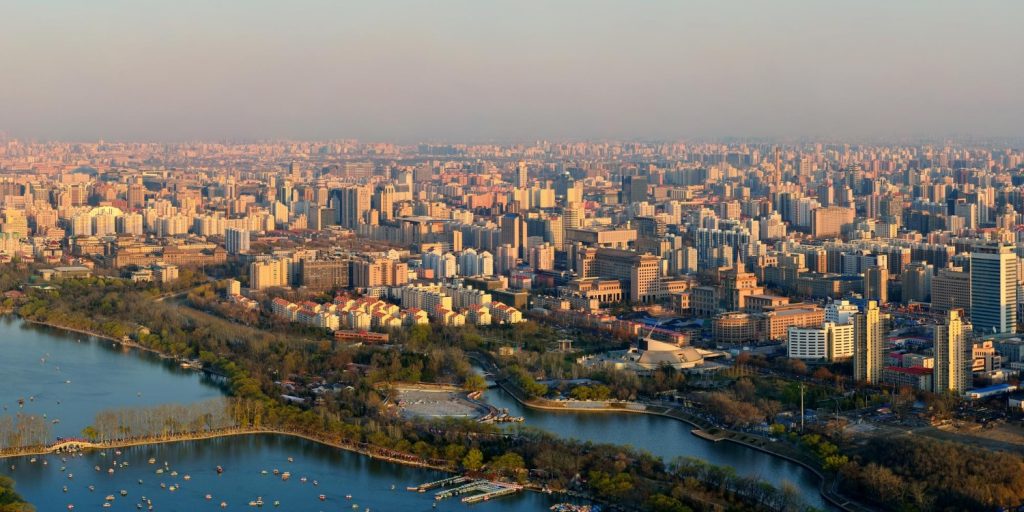
Egypt – Rising Global Property Interest
As inflation cools and global uncertainty persists, Egypt’s evolving property landscape is drawing renewed attention from discerning international investors seeking substance over spectacle.
The modern Middle Eastern skyline often draws the eye upward. In Cairo, however, the more compelling transformation is found on the horizon line, where the city’s edges have been pushed outward by demographic momentum, new infrastructure and a desire for a different kind of urban life. Egypt’s real estate market, long influenced by domestic patterns and periods of volatility, now finds itself at a moment of subtle but consequential change. Not the kind that arrives with headlines or market shocks, but the quieter shift that comes when a country begins to imagine its future differently.
It is this tonal shift—economic, demographic and cultural—that is beginning to register with international observers. Analysts speak of Egypt with a new precision, noting its resilience through periods of inflation, its demographic strength, and its unique price structure compared with global markets struggling under the weight of affordability crises. Investors from the United Kingdom, the Gulf and parts of Europe have begun to approach Egypt not as an exotic alternative but as a rational candidate in a global property ecosystem that has grown uneven, expensive and uncertain.
What sets Egypt apart today is not exuberance or speculative hype. It is the weight of evidence. Currency shifts have increased affordability for overseas buyers. Urban expansion has redefined the composition of Cairo’s residential spine. Tourism has recovered at a pace acknowledged by the UN World Tourism Organization (https://www.unwto.org). And long-term fiscal reforms monitored by the International Monetary Fund (https://www.imf.org) and the World Bank (https://www.worldbank.org) have created a more predictable economic structure than the country has known in decades.
The cumulative effect is a property landscape that feels neither overheated nor dormant. It feels balanced—still developing, still imperfect, but increasingly aligned with the expectations of international investors accustomed to clearer frameworks and long-term consistency.
Cairo’s Changing Narrative
There is a particular quality to Cairo’s current expansion that stands in contrast to the city’s traditional image of density and compact vitality. The eastward journey toward the New Administrative Capital is no longer a venture into half-formed ambition, but a visible transition into a new model of Egyptian modernity. Ministries with mirrored facades, landscaped boulevards and emerging commercial districts suggest a city being built to relieve pressures that have weighed on Cairo for decades.
For Egyptians, the project carries the complexity of any national undertaking of this scale. For foreign investors, it offers a symbol of commitment: evidence that the state has a clear urban strategy and the capacity to execute it. The clarity of purpose conveyed in government planning documents and official briefings provides reassurance to those who have observed Egypt from afar, waiting for signs that reform and infrastructure are moving in tandem.
Older districts such as New Cairo and the Fifth Settlement have matured into fully functioning urban centres—no longer speculative ventures but lived-in neighbourhoods with international schools, healthcare facilities, business parks and residential communities that resemble the suburban arcs of major global cities. Developers have become more sensitive to middle-class expectations: green spaces, reliable services, and designs that reflect a shift toward more contemporary living.
British buyers, in particular, have taken note. Many have been nudged abroad by domestic markets constrained by price growth and supply shortages. Estate agents such as Savills UK (https://www.savills.co.uk) and Knight Frank UK (https://www.knightfrank.co.uk) routinely publish affordability comparisons that place Egypt in a contrasting light. The space, amenities and new-build quality available in districts such as New Cairo challenge assumptions formed in London or Manchester, where budgets stretch far less generously.
The Coastline and the Return of International Appetite
If Cairo represents Egypt’s structural ambition, the coastline embodies its emotional appeal. The Red Sea, long a magnet for divers and winter travellers, has entered a phase of renewal. Infrastructure upgrades, increased flight connectivity and improved hospitality offerings have strengthened confidence. UNWTO data underscores Egypt’s impressive tourism rebound, drawing not just visitors but also long-term residents and seasonal occupants whose presence has reshaped local property markets.
Red Sea towns once reliant on transient tourism now support established expatriate communities, schools, clinics and year-round residential demand. Hurghada, Sahl Hasheesh, El Gouna, Makadi Bay and Sharm El Sheikh have each carved out distinct identities while contributing to the broader narrative of coastal resilience.
On the Mediterranean, the transformation is even more pronounced. Egypt’s northern coastline—often overlooked in previous decades—has caught the attention of Gulf investors who monitor regional property trends through platforms such as Bayut (https://www.bayut.com), Property Finder UAE (https://www.propertyfinder.ae), Bayut.sa (https://www.bayut.sa) and Property Finder Saudi Arabia (https://www.propertyfinder.sa). This cross-Gulf appetite is driven not merely by price differentials but by a belief that Egypt’s coastline is capable of entering the wider Mediterranean competitive landscape alongside Turkey, Greece and parts of southern Italy.
European buyers, too, have widened their lens. In Italy, Engel & Völkers (https://www.engelvoelkers.com/en-it) has documented increasing interest among clients priced out of traditional coastal regions. In Spain, Idealista (https://www.idealista.com/en) has reported similar behavioural changes, especially among Northern Europeans disillusioned by rising prices and limited availability along the Iberian coast. Germany’s Engel & Völkers division (https://www.engelvoelkers.com/de) has highlighted the same phenomenon, driven by mobility trends and remote-work patterns that have allowed professionals to reconsider where “home” should be.
Economic Framework and Currency Realities
No assessment of Egypt’s real estate evolution is complete without acknowledging the economic recalibration that shapes it. Inflation, while still a sensitive area, has moderated from previous peaks. Government figures and central bank communications reflect a commitment to transparency enforced in part by IMF agreements that require detailed reporting and structural reforms.
Currency depreciation—painful domestically—has created a unique window for foreign buyers. When converting pounds, euros or dollars into Egyptian pounds, the value proposition becomes stark. This purchasing power differential is now among the most frequently cited reasons for overseas interest. The phenomenon is not unique to Egypt, but few countries combine currency accessibility with such sustained demographic housing demand.
Developers, squeezed by rising construction costs, have adapted by offering extended payment plans suited to both domestic buyers and foreign purchasers seeking entry points without large upfront commitments. This flexibility has supported demand during periods when global financial conditions might otherwise have slowed transactions.
Demographics and the Engine of Structural Demand
Egypt’s population, now exceeding 110 million, remains the strongest underpinning of its property market. The housing demand generated by new family formation, internal migration and changing lifestyle expectations ensures a level of market activity not dependent on foreign capital. In a global landscape where property slowdowns are common, the depth of Egypt’s domestic demand stands out.
Younger Egyptians increasingly prioritise infrastructure, accessibility and lifestyle quality—expectations that have pushed developers to align benefits with modern aspirations. Well-planned neighbourhoods, integrated services and contemporary designs are no longer exceptions; they are becoming norms.
International buyers recognise the significance of this demographic certainty. It suggests stability, long-term occupancy and rental potential that are grounded in social and economic realities rather than speculation.
Global Context and Comparative Value
Property analysts following UK, European and Gulf markets frequently position Egypt as one of the few remaining large-scale markets offering genuine comparative value. The UK’s affordability crisis continues to push buyers toward overseas alternatives. Italy, Spain and Germany—once considered relatively stable—have seen their own price pressures escalate.
Platforms such as Engel & Völkers Germany and Engel & Völkers Italy provide transparent global comparison tools that allow buyers to contrast price-per-square-metre values. The result is unambiguous: Egypt offers space and climate advantages at price points that feel increasingly rare.
For Gulf buyers accustomed to Dubai and Riyadh price baselines, data from Bayut and Property Finder provides similar clarity. Egypt’s value proposition becomes more obvious when set against markets with decade-long escalation patterns.
Risk, Reward and the Maturing Investor Outlook
Egypt remains an emerging market, and with that comes a degree of unpredictability. Currency fluctuations, inflation and financing conditions must be considered carefully. Yet the presence of intergovernmental oversight—IMF, World Bank, UNWTO—offers reassurance that economic shifts are monitored through globally recognised frameworks.
Foreign investors adopting a long-term lens find that the balance between risk and reward often works in Egypt’s favour. They are not searching for instant gains but for coherent, transparent, dependable narratives. In Egypt, they increasingly see one.
A Market Moving Toward Maturity
The most compelling aspect of Egypt’s real estate landscape today is its evolution from a market shaped by episodic surges or contractions into one defined by gradual maturity. The forces shaping it—urban ambition, demographic momentum, international oversight, coastal redevelopment and global affordability shifts—are not fleeting. They are foundational.
As Egypt continues to refine its urban and economic identity, the property market stands at the intersection of national aspiration and global re-evaluation. It is no longer a peripheral destination in the global property conversation. It is increasingly central to it.
For the discerning international investor—British, Gulf or European—Egypt offers something seldom found today: space, value, climate and trajectory, all grounded in a country reshaping its future with deliberation rather than haste.
Financial Disclaimer:
The information provided in this article is for general informational purposes only and does not constitute financial advice. While every effort has been made to ensure the accuracy of the content, market conditions may change, and unforeseen risks may arise. The author and publisher of this article do not accept liability for any losses or damages arising directly or indirectly from the use of the information contained herein.
Copyright 2025: www.propertyegypt.uk —
Picture: freepik.com